Loading...

Our Products

Our Products

Engineering Strength into
Every Structure.
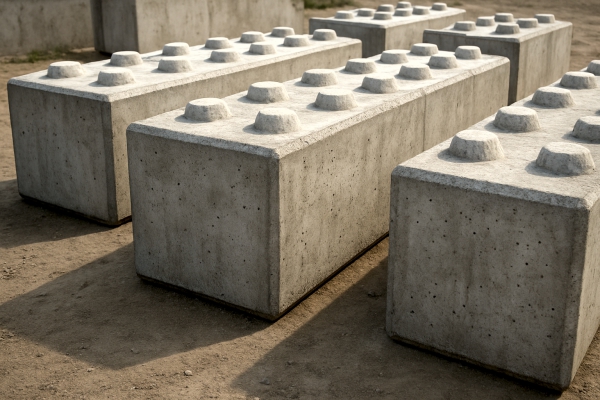
LEGO INTERLOCKING CONCRETE BLOCKS

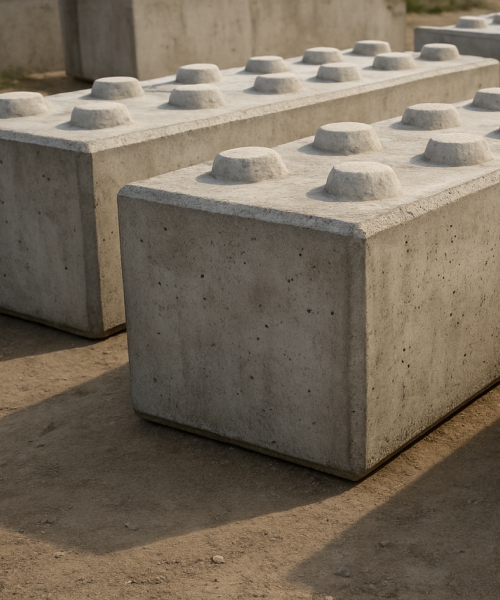
Lego Interlocking Concrete Blocks are large, heavy-duty building blocks made of concrete that fit together like toy LEGO bricks.

Read More

TETRAPOD
BREAK WATER

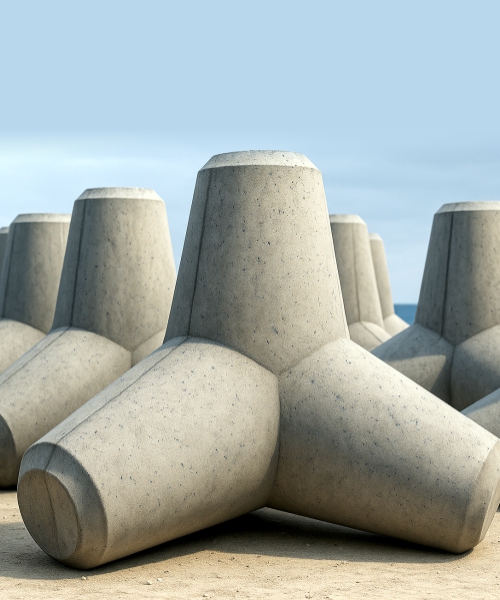
A tetrapod is a four-legged concrete block that reduces wave force by letting water flow around it even under heavy wave action.

Read More
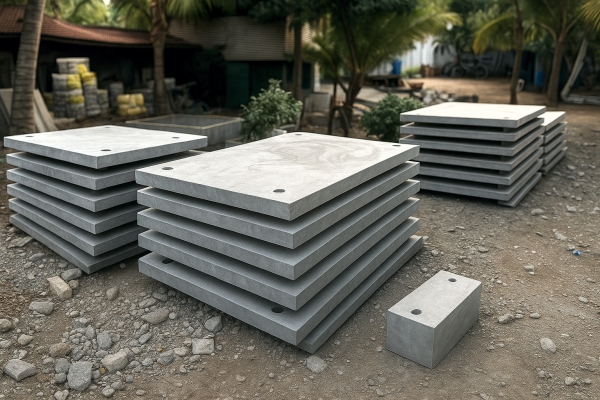
GIANT INTERLOCKING PAVER BLOCK

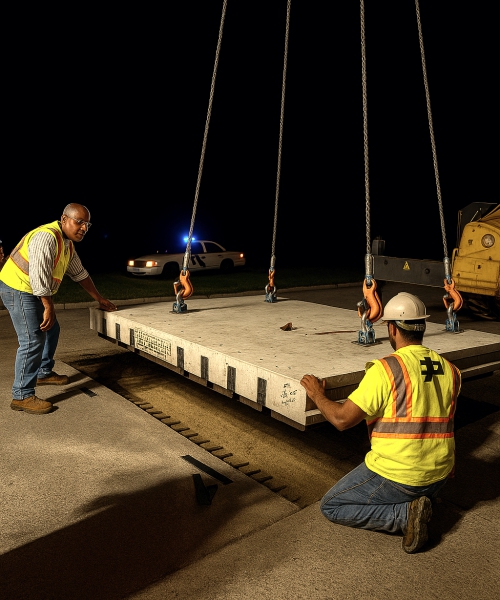
Giant Interlocking Paver Slabs extremely strong, perfect for expressways, military runways, and industrial ports.

Read More
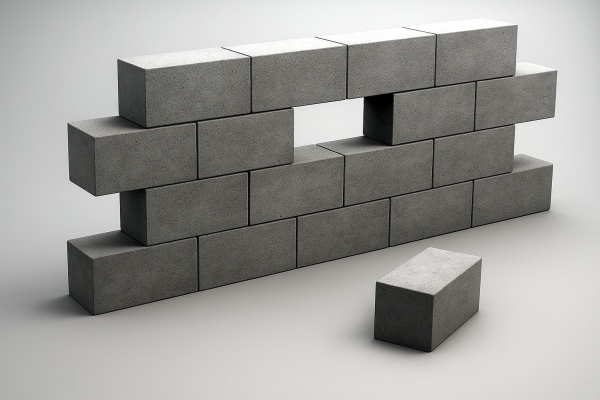
CONCRETE
SOLID BLOCKS

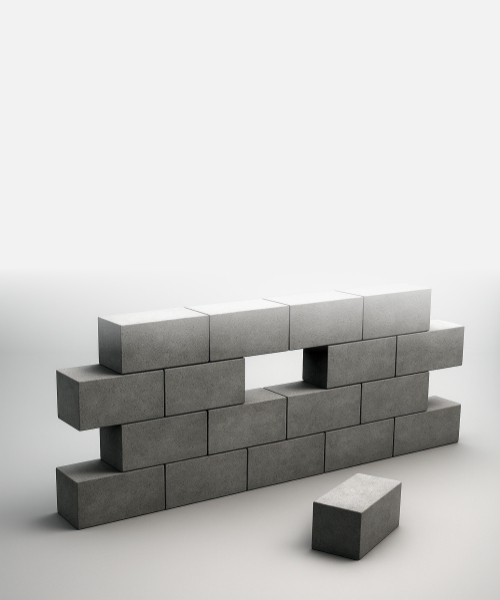
Concrete solid blocks are made from mixed various concrete products used for both load-bearing & non-load-bearing walls.

Read More


Trusted Global Material Supplier

Our raw material supplier plays a vital role in maintaining the strength and reliability of our products. With consistent quality and timely delivery, they help us meet the highest standards in every build.

  • Image

    Lego Interlocking Concrete Blocks

    Lego Interlocking Concrete Blocks are large, heavy-duty building blocks made of concrete that fit together like toy LEGO bricks. They’re widely used in construction and landscaping due to their ease of use, strength, and reusability.

    1. Interlocking Design:

    Each block has protrusions (studs) on top and recesses on the bottom, allowing them to fit together without mortar.

    2. Modular Sizes (typical examples):

    Full Block:
    2x2x8 ft block ≈ 2,220 kg (+/-)
    2x2x6 ft block ≈ 1,665 kg (+/-)
    2x2x4 ft block ≈ 1,110 kg (+/-)
    2x2x2 ft block ≈ 555 kg (+/-)
    Half, Corner, or Top blocks also available.

    3. Material:

    Made from high-grade concrete (often M60–M120), with options to include admixtures, synthetic fibers, and micro silica for strength and durability.

    4. Lifting Hooks:

    Built-in lifting points make it easier to place the blocks with a crane or forklift.

    5. Stackable and Reusable:

    Easily repositionable; great for temporary or evolving structures.

    Retaining Walls
    Bunkers for Sand, Grain, Fertilizer
    Security Barriers
    Storage Bays
    Flood Protection
    Industrial Yards and Warehousing
    Temporary Construction Structures

    No mortar or cement required
    Fast and simple installation
    Durable and weather-resistant
    Reusable and eco-friendly
    Customizable dimensions and logo imprinting

    M60 Grade to M120 Grade
    Weight: ~2.4 to 2.8 tons/block
    Compressive Strength: ≥ 80 MPa
    Reinforced with: Fibers + Micro Silica + Sika Admixture
    Curing: Long-term water curing for durability
    Surface textures: Smooth, rough, exposed aggregate, Color pigmentation if required, Pre-inserted lifting points, Hook slots for cranes or forklifts .

  • Tetrapod

    A tetrapod is a four-legged concrete structure designed to dissipate the energy of incoming waves by allowing water to flow around rather than against it. Its interlocking shape helps resist displacement even under heavy wave action.

    Size (Ton) Approx. Volume (m³) Dimensions (LxWxH in m) Weight (kg) Application Area
    2 Ton 0.8–0.85 1.5x1.5x1.3 2000 Small harbor walls, groynes
    5 Ton 2.0–2.1 2.0x2.0x1.7 5000 Breakwaters, mid-size ports
    10 Ton 4.0–4.2 2.5x2.5x2.0 10000 Coastal protection, port entrances
    15 Ton 6.2 – 6.5 2.9x2.9x2.3 15000 Large wave breaker zones
    20 Ton 8.3–8.5 3.2x3.2x2.5 20000 Exposed marine areas
    25 Ton 10.5–11.0 3.5x3.5x2.8 25000 Heavy-duty breakwaters, deep-sea ports
    Note: Dimensions and volume can vary slightly depending on mold design and wall thickness.

    Concrete Grade Recommendation

    M40 to M60 for small tetrapods (2T – 10T)
    M60 to M100 or higher (with additives like micro silica, virgin synthetic fibers, and admixtures) for large tetrapods (15T – 25T)

    Reinforcement & Design Notes

    Typically unreinforced or lightly reinforced (depending on local wave height, design method, and environmental factors).
    Can be cast-in-situ or precast.
    Designed per BS 6349, PIANC, or Indian IS: 4651 Part 4 guidelines.

    Placement Technique

    Placed randomly or in layered patterns using cranes.
    Require lifting hooks for handling.
    Proper interlocking during placement is essential for wave energy dissipation.

    Manufacturing Recommendations

    Use self-compacting concrete for better mold fill.
    Use steel molds for high-volume precast work.
    Steam curing for faster turnaround.

    Image
  • Image

    Giant Interlocking Concrete Paver Slabs

    Giant Interlocking Concrete Paver Slabs (4m x 2m x 150mm) With M80 to M120 Grade Concrete

    Product Dimensions

    Size (L×W×T) in meters Volume (m³) Weight (kg) Usage Case Load Capacity (on ground)
    5.0×2.5×0.15 1.875 4,500–4,700 kg Heavy-duty, low joints (ports, crane paths) 25–30+ tons
    4.0×2.0×0.15 1.200 2,880–3,000 kg Prefab roads, industrial zones 20–25+ tons
    3.0×1.5×0.15 0.675 1,600–1,700 kg Medium trucks, forklift loading 12–15+ tons
    2.0×1.0×0.15 0.300 700–750 kg Light load zones, easier manual placement 5–8+ tons

    Concrete Specifications

    Grade M80 to M120
    Cement Type OPC 53 Grade (UltraTech or equivalent)
    Additives Micro Silica, GGBS, Fly Ash
    Admixtures Sika / Fosroc / MBT High-Range Superplasticizers
    Fibers Virgin Synthetic Polypropylene (Anti-crack)
    Water-Cement Ratio < 0.30
    Target Strength @28 Days 80 MPa to 120 MPa
    Curing Steam/Chamber or Water-Cured for ≥14 days

    Design Features

    Interlocking System: Male-Female edge joint or custom dovetail
    Anti-Skid Surface: Optional finish or grooves
    Lifting Hooks: 4-point/6-point lifting system for crane handling
    Reinforcement: High-strength steel mesh or fiber reinforcement
    Edge Protection: Beveled edges to reduce chipping

    Use Cases

    Defense roadways / Border infrastructure
    Container yards / Industrial ports
    Heavy-duty factory driveways
    Temporary highways / disaster response
    Airbase taxiways / aircraft support platforms

    Advantages

    Ready-to-lay road slabs – Quick installation with crane
    Extreme strength – Resists heavy axle loads & impact
    Reusable – Can be lifted and relaid multiple times
    Environmentally sustainable – Less on-site concrete work
    Precision-molded – Uniform shape ensures tight joints

    Ideal Sizes for Giant Paver Blocks

    Size (L×W×T) Best Use Case Can Be Lifted By Load Capacity (Ground) Comments
    3.0m×1.5m×150mm Medium trucks, forklifts, site roads Forklift, crane 12–15 tons Balanced: Easy handling+strong
    4.0m×2.0m×150–180mm Internal roads, industrial flooring Crane or heavy forklift 20+ tons Heavy-duty & widely used
    5.0m×2.5m×150–180mm Large yards, ports, crane tracks, runways Crane only 25–30+ tons Maximum coverage, high dead weight
    2.0m×1.0m×120–150mm Manual-lift possible with equipment (light duty) Forklift or team lift 5–8 tons Cost-efficient, less lifting effort

  • Concrete Solid Blocks

    Concrete solid blocks are precast building materials made from a mixture of cement, aggregates (stone dust or gravel), and sand, used primarily for load-bearing and non-load-bearing walls. These blocks are known for their high strength, durability, and thermal resistance.

    Standard Sizes (in mm)

    Block Size (L×W×H) Common Use
    400 × 200 × 200 External load-bearing walls
    400 × 200 × 150 Partition or internal walls
    400 × 200 × 100 Internal walls, partition walls
    *Custom sizes can be manufactured based on project needs.

    Grades of Concrete Used

    Application Type Recommended Concrete Grade
    Low-rise residential M5 to M10
    Mid-rise buildings M10 to M15
    High-load applications M20+ (optional reinforcement)

    Technical Specifications

    Parameter Value/Range
    Compressive Strength 5 – 15 MPa (M5 to M15)
    Density 1800 – 2200 kg/m³
    Water Absorption < 10% (by weight)
    Sound Insulation Good (better than bricks)
    Fire Resistance Up to 6 hours
    Thermal Conductivity Low (energy-efficient)

    Applications

    Residential / Commercial Use
    Load-bearing walls for houses
    Compound and boundary walls
    Partition / Retaining walls
    Basement construction
    Apartment complexes
    Office / Industrial buildings
    Warehouse partitions

    Advantages

    High Strength: Suitable for multi-storey buildings.
    Cost-effective: Reduces mortar usage and plastering.
    Faster Construction: Larger block size speeds up work.
    Thermal & Sound Insulation: Keeps buildings cooler and quieter.
    Eco-friendly: Uses industrial by-products like fly ash.

    Why Use Solid Blocks Over Clay Bricks?

    Higher compressive strength
    Uniform size – reduces plastering cost
    Pest and fire resistant
    Better sound and thermal insulation
    Sustainable alternative

    Image